
Cleaning Service Website Copywriting: One-Time vs Monthly Services
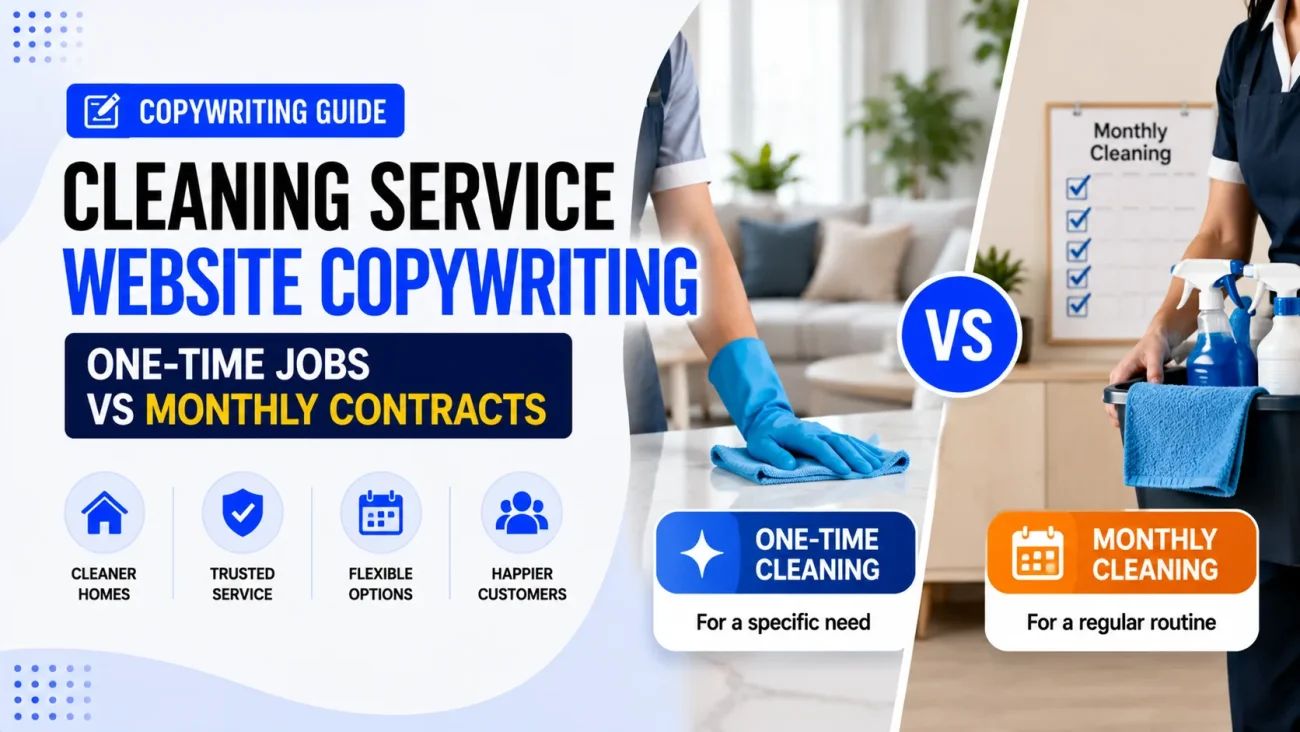
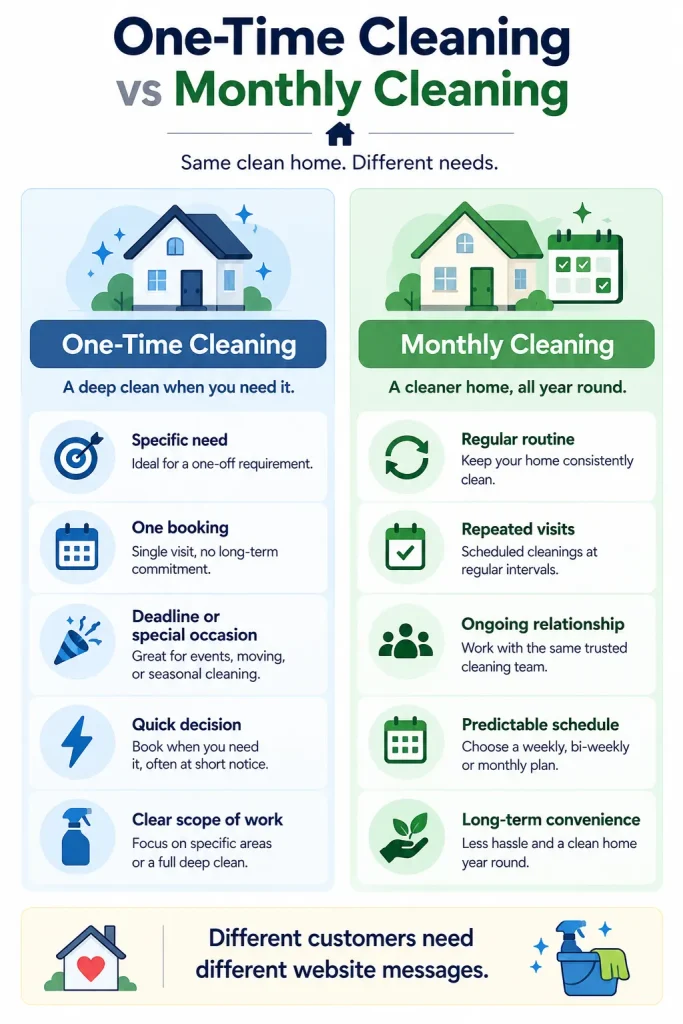
A cleaning business website often has to speak to two very different types of customers. One person may need a cleaner because they are moving out of a rented home next week, preparing for guests, or simply need help after months without a deep clean. Another person may be looking for someone who can clean their home every week or every month and become a regular part of their household routine.
The problem starts when the website uses the same message for both customers. A one-time customer usually wants to know what will be cleaned, how much it may cost, when someone can come, and how quickly the booking can be made. A recurring customer is thinking more about reliability, cleaning frequency, what happens on every visit, and whether the service will fit into their regular routine. Good Cleaning Service Website Copywriting should make these two choices easy to understand instead of making every visitor read the same general service description.
Why Cleaning Websites Need Different Messages
A cleaning service may offer house cleaning, deep cleaning, move-in cleaning, move-out cleaning, maid service, office cleaning and recurring cleaning, but customers do not always arrive with the same reason for booking. Someone searching for a one-time deep clean may have a specific problem that needs to be solved soon, while someone looking for a monthly cleaning service is making a longer-term decision.
This difference matters because the website copy should match the reason behind the enquiry. If we place one generic paragraph saying that the company provides “professional and reliable cleaning services,” the visitor still has to work out what service is right for them and what they should do next.
Good Cleaning Service Website Copywriting therefore starts by separating the customer needs before writing the actual page. The goal is not to make the website sound more complicated, but to help each visitor quickly find the service that matches their situation.
One-Time Cleaning Customers Have a Different Need
One-time customers are often looking for a specific cleaning job rather than an ongoing arrangement. They may be preparing a property for sale, moving into a new home, getting ready for an event, dealing with a home that has not been cleaned properly for some time, or simply wanting professional help for one particular day.
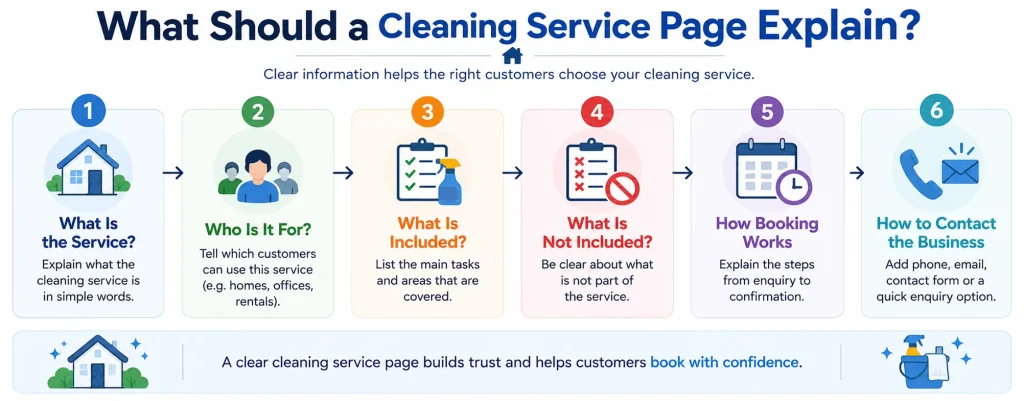
Because the need may be connected to a deadline, the website should answer practical questions early. The visitor should be able to understand what the service includes, what type of home it is suitable for, whether the company brings cleaning supplies, how quotes work, and how to request a booking.
For example, instead of writing:
“We offer high-quality cleaning services for homes of all sizes.”
A stronger version would be:
“Need your home cleaned before guests arrive or after a busy period? Our one-time home cleaning service covers the main living areas, bedrooms, bathrooms and kitchen, with the exact cleaning work confirmed before your appointment.”
The second version gives the customer a reason to continue reading because it speaks to a real situation.
Monthly Customers Are Buying a Routine
A customer looking for monthly cleaning is making a different decision because they are not only asking whether the house can be cleaned once. They are asking whether the company can provide a service they can depend on over time.
The website should therefore explain what regular cleaning means, how often customers can book, what happens during each visit, and whether the same type of cleaning is repeated or adjusted based on the home’s needs. If weekly, every-two-week and monthly options are available, these should be explained clearly rather than hidden inside a general booking form.
For recurring services, the value is often about keeping the home manageable instead of waiting until a large cleaning job is needed. Regular cleaning can help customers maintain a routine, while the business gets a clearer idea of the customer’s expected schedule.
This difference should be visible in the Cleaning Service Website Copywriting, because a monthly customer should not have to read a page written mainly for someone who needs a one-time deep clean.
Your Homepage Should Not Treat Every Service the Same
The homepage is usually the first page many visitors see, so it needs to give a simple overview of the cleaning company without trying to explain every service in full detail.
A useful Cleaning Service Website Homepage Content structure can start with a clear headline, followed by a short explanation of the service area and the main cleaning options. From there, visitors can be guided toward one-time cleaning, recurring cleaning, deep cleaning or other services that the business actually offers.
For example:
House Cleaning for One-Time Jobs and Regular Visits
“We clean homes across [Service Area] with flexible options for one-time cleaning and regular visits. Choose the service that fits your home and schedule, then contact us for a quote or booking.”
This is much clearer than a headline such as “Your Trusted Cleaning Experts,” because the visitor can immediately understand what type of service the business provides.
Our earlier article, How to Write a Headline for a Local Service Website can explain how a cleaning company can write a clear homepage headline that explains its service and location.
Give One-Time Cleaning Its Own Service Page
If one-time cleaning is an important service, it should not only appear as one sentence on the homepage. A dedicated service page gives the business enough space to explain what customers receive and why they may need the service.
The page can explain the common situations where one-time cleaning is useful, what areas of the home are covered, how the booking works, and what information the customer should provide when asking for a quote. If the business offers deep cleaning or move-out cleaning separately, those services can have their own pages as well.
Current cleaning-service website examples commonly separate different service types such as residential cleaning, deep cleaning and move-in or move-out cleaning rather than putting every service into one general page.
This also makes the Cleaning Service Website Copywriting more focused because the page can answer questions from people who are specifically looking for a one-time cleaning job.
Create a Separate Message for Recurring Cleaning
Recurring cleaning deserves its own page when it is a meaningful part of the business because the customer is making a longer-term choice.
The page should explain the available frequency options in simple language, such as weekly, every two weeks or monthly, if those options are genuinely offered. It should also explain what customers can expect during regular visits and how the service can be adjusted when their needs change.
For example:
“Want to spend less time keeping up with housework? Our regular cleaning service lets you choose a cleaning schedule that works for your home, with visits arranged weekly, every two weeks or monthly.”
This copy does not promise something unrealistic, but it clearly explains the reason someone might choose a recurring service.
Research into cleaning-service website structures also shows the value of making recurring service options easy to find and separating them from one-time services, because the two customers often have different questions and booking needs.
Explain What Is Included
One of the biggest problems with cleaning website copy is that it often uses broad words without explaining the actual work.
Words such as “complete,” “professional,” “detailed” and “thorough” do not tell customers much on their own. A visitor is more likely to understand the service when the website explains what the cleaner actually does.
For example, a standard recurring cleaning page could mention:
- Kitchen surfaces and floors
- Bathroom cleaning
- Dusting common areas
- Vacuuming and mopping
- Bedroom cleaning
- Other agreed regular tasks
The exact list should match the company’s real service, and it should be clear if certain jobs such as inside ovens, windows, heavy stains or inside cabinets require an additional service.
This is useful Cleaning Company Website Content because it reduces confusion before the customer contacts the business.
Do Not Sell Monthly Cleaning Like a One-Time Job
A common copywriting mistake is to describe monthly cleaning only as a cheaper or repeated version of a one-time cleaning service.
The customer is not simply buying the same job several times. They are choosing a regular arrangement that should make cleaning easier to manage over time, so the website should explain the convenience and routine rather than focusing only on the individual visit.
For example:
“Regular cleaning is designed for homes that need ongoing care, so you do not have to wait until the house needs a major clean before booking help again.”
This makes the reason for recurring service easy to understand.
The same principle applies to Maid Service Website Copy. If the business uses the term “maid service,” the page should still explain what the customer receives, how often visits happen and what tasks are included instead of assuming that every visitor understands what the term means.
Make Pricing Easier to Understand
Cleaning prices can depend on several things, including the size of the home, number of rooms, type of cleaning, condition of the property and cleaning frequency, so not every business can give one fixed price for every customer.
However, saying only “Call us for pricing” may leave too many questions unanswered.
If possible, the website can explain how the price is worked out or provide starting prices, ranges or examples that are accurate for the business. If recurring customers receive a different rate, the website can explain that clearly without making the pricing system confusing.
This is also where good Cleaning Business Website Wording matters. A simple explanation such as “Your final price depends on the size of the home, cleaning type and frequency, and we confirm the price before booking” is more useful than a vague promise about affordable cleaning.
Our earlier article, Website Pricing Strategy: Should You Put Prices on Your Website? explains whether a cleaning business should show prices, starting rates or pricing information on its website.
Use Different Calls to Action
The call to action should match the type of customer reading the page.
A person who needs a one-time cleaning may be ready to request a quote or book a date, while someone considering monthly cleaning may first want to understand the available schedules and what regular visits include.
Instead of using “Contact Us” everywhere, the website can use clearer actions such as:
- Request a One-Time Cleaning Quote
- Choose a Regular Cleaning Schedule
- Ask About Monthly Cleaning
- Check Cleaning Availability
The exact CTA should match what the business actually offers, but the main idea is simple: tell the visitor what will happen after they click.
Use the Right Questions for Each Customer
FAQs are particularly useful for cleaning businesses because customers often have practical questions before allowing someone into their home.
For one-time cleaning, useful questions may include whether the company brings supplies, how the price is calculated, what areas are cleaned and how far in advance customers should book.
For recurring cleaning, questions can focus on cleaning frequency, changing a cleaning date, skipping a visit, changing the service level and what happens if the customer’s needs change.
The questions should come from real customer concerns rather than being created only to add keywords. Good FAQs can make the page easier to understand while also helping customers decide whether the service is suitable.
Build Trust Before Asking Someone to Book
Cleaning is a personal service because workers may enter someone’s home, sometimes when the customer is not there. This means trust needs to be part of the website copy rather than being treated as something that can be added at the very bottom of the page.
If the company is insured, bonded or uses background-checked cleaners, and these claims are accurate, the website can explain them clearly. Reviews, real photographs, service information and a clear explanation of how the company works can also help visitors feel more comfortable.
The important point is to avoid making claims that cannot be supported. A simple statement about a real business practice is more useful than saying the company is “the most trusted” or “number one” without proof.
Show the Difference Between Standard and Deep Cleaning
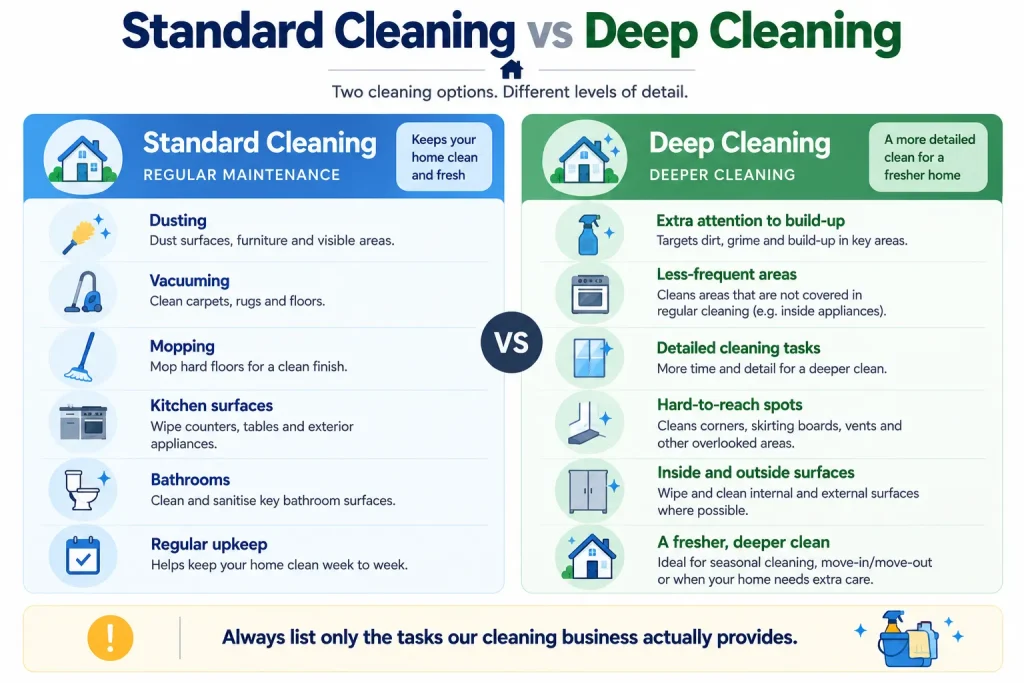
Many customers do not know exactly what separates regular house cleaning from deep cleaning, so the website should explain the difference in simple language.
Regular cleaning usually focuses on keeping the home maintained through common cleaning tasks, while deep cleaning can involve more detailed work and areas that are not handled during every normal visit. The exact work will depend on the business, so the website should only list tasks that the company actually provides.
This distinction can also help customers choose the right service instead of booking a standard cleaning and expecting a deep-clean result.
Create a Clear Booking Journey
A cleaning website should make the next step easy because many customers visit while they are comparing several companies.
A booking form does not need to ask for every possible detail at the beginning. It can ask for the basic information needed to understand the job, such as the customer’s location, home size, cleaning type, preferred date and contact information. More details can be collected later if required.
For recurring cleaning, the form can also ask how often the customer wants service. Current cleaning website examples commonly use booking flows that distinguish frequency options such as one-time, weekly, every-two-week and monthly cleaning.
The copy around the form should also tell the visitor what happens next, such as whether the business will call, email a quote or confirm availability.
Connect One-Time Services to Recurring Services
One-time cleaning and recurring cleaning should be separate choices, but they do not need to be completely separate journeys.
Someone who books a deep clean today may later decide that they would rather have regular cleaning visits, so the website can gently explain that option without making the first customer feel pressured.
For example:
“If you would like help keeping your home clean after your one-time service, ask us about our regular cleaning options.”
This is simple, helpful and connected to the customer’s situation.
Our earlier article, WhatsApp Templates for Small Business: First Replies, Follow-Ups and Review Requests explain how a cleaning business can follow up with customers after an enquiry or completed service.
Write Location Information Naturally
If the cleaning business serves several cities or neighbourhoods, the website should make the service area easy to understand.
A homepage can give a general service-area overview, while dedicated location pages can be created when there is enough useful information to make each page different and relevant. The copy should never simply repeat the same paragraph while changing the city name.
For example:
“We provide regular and one-time house cleaning across [City] and selected nearby areas. Contact us to confirm whether your address is within our current service area.”
This is much more useful than filling a paragraph with a long list of place names.
Our earlier article, How Many City Pages Do You Actually Need? explains how a cleaning company should decide which locations deserve their own website pages.
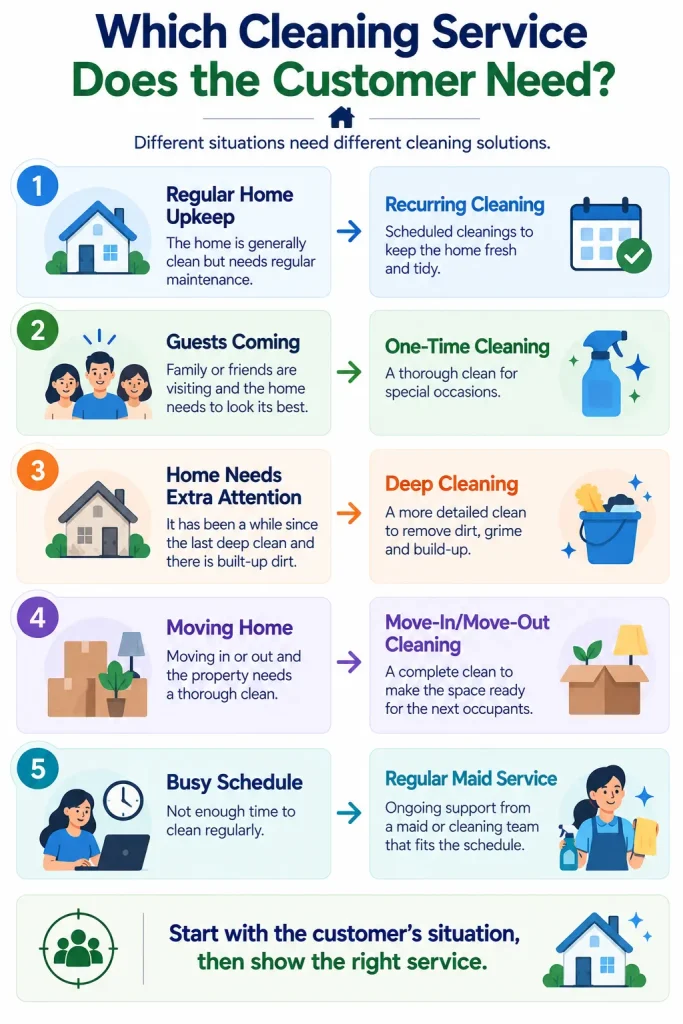
Write for the Customer’s Situation
Good cleaning website copy becomes easier to write when we stop thinking only about services and start thinking about situations.
A visitor may be asking:
“I need the house cleaned before my parents arrive.”
“I am moving out next week.”
“I want someone to clean every two weeks.”
“I have not had time to keep up with the house.”
“I need help after a party.”
These situations can become useful sections on the website because they explain why someone may need the service without using complicated marketing language.
This is one of the strongest ways to improve House Cleaning Website Copy, because the visitor can recognise their own situation and quickly move toward the right service.
Make the Website Easy to Read on a Phone
Many people looking for a cleaner will visit the website from a phone, so the copy should be easy to scan without becoming a collection of one-line sentences.
Use clear headings, medium-length paragraphs and a few useful bullet points where a list genuinely makes the information easier to understand. Important information such as the service type, service area, booking option and contact method should not be hidden inside long blocks of text.
The website also needs to make the next action easy to find, particularly on service pages where a customer may decide to book immediately after understanding what is included.
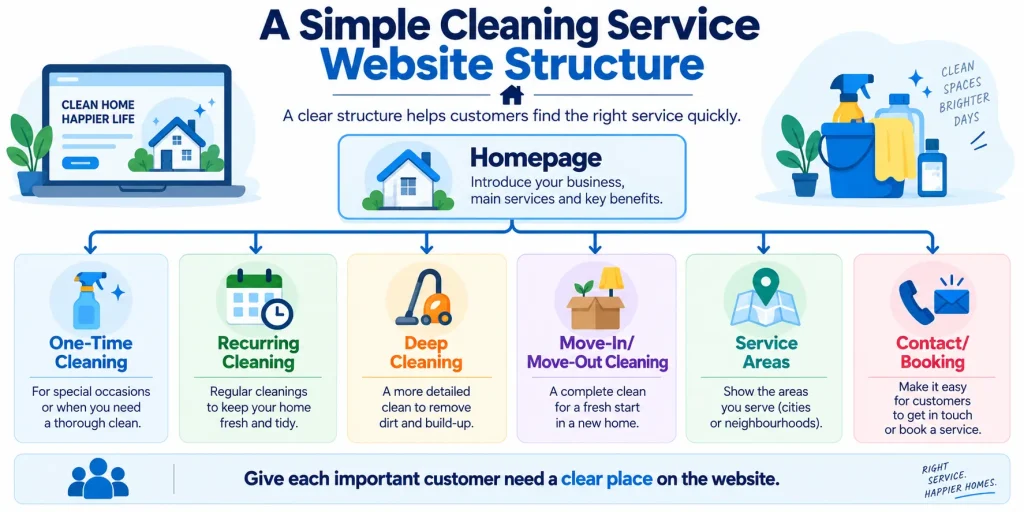
A Simple Structure for a Cleaning Service Website
A cleaning business does not need dozens of complicated pages to explain its services. The exact structure depends on what the business offers, but a simple website might include a homepage, about page, one-time cleaning page, recurring cleaning page, deep cleaning page, move-in or move-out page, service-area pages where useful, and a contact or booking page.
The important thing is that every page has a clear purpose.
The homepage introduces the business and main choices, service pages explain specific services, location pages explain genuine service areas, and the booking page helps the visitor take the next step.
Common Copy Mistakes Cleaning Businesses Should Avoid
The first mistake is using the same message for every type of customer. A one-time customer and a monthly customer have different reasons for booking, so the website should explain those choices separately.
Another common problem is using vague wording such as “professional cleaning solutions” without explaining what the customer actually receives. The website should describe the service in everyday language and make it clear what is included.
It is also better to avoid hiding every important detail behind a contact form. Customers should be able to understand the basic service, cleaning options, service area and next step before they have to call or submit an enquiry.
Finally, do not create separate pages simply because a competitor has them. Every page should have a real purpose and enough useful information to stand on its own.
Final Checklist for Cleaning Service Website Copy
Before publishing or rewriting a cleaning website, check whether the copy clearly separates one-time and recurring services and whether each customer can quickly understand which option may suit them.
The main service should be clear on the homepage, while important cleaning services should have focused pages when they deserve more explanation. Pricing should be explained as clearly as the business can reasonably manage, and the website should tell customers what is included, how booking works and what happens after an enquiry.
A simple final check can include:
- One-time and recurring services are clearly separated.
- The homepage explains the main choices.
- Each major service has useful information.
- Cleaning tasks are explained clearly.
- Pricing or the pricing process is explained.
- Service areas are easy to understand.
- Trust information is visible.
- FAQs answer real customer questions.
- CTAs match the service.
- Booking is easy on mobile.
Conclusion
The main purpose of Cleaning Service Website Copywriting is not to make a cleaning company sound bigger or more impressive than it is. The purpose is to help the right customer understand the service and take the next step without confusion.
One-time cleaning customers usually come with a specific need, while monthly customers are looking for a service they can include in their regular routine. When the website understands this difference, the copy becomes easier to write because each page can focus on the questions that matter to that customer.
A good cleaning website can therefore explain one-time cleaning as a simple solution for a specific job while presenting recurring cleaning as an ongoing service for customers who want regular help. It can show what is included, explain how pricing works, answer common questions, provide genuine trust information and make booking easy.
Most importantly, the website should sound like a real cleaning business speaking to a real customer. Simple language, clear service information and honest explanations will usually do more for the website than a page filled with repeated keywords and big marketing claims.