
Wedding Planner Website Copywriting: Writing for a Once In a Lifetime Events
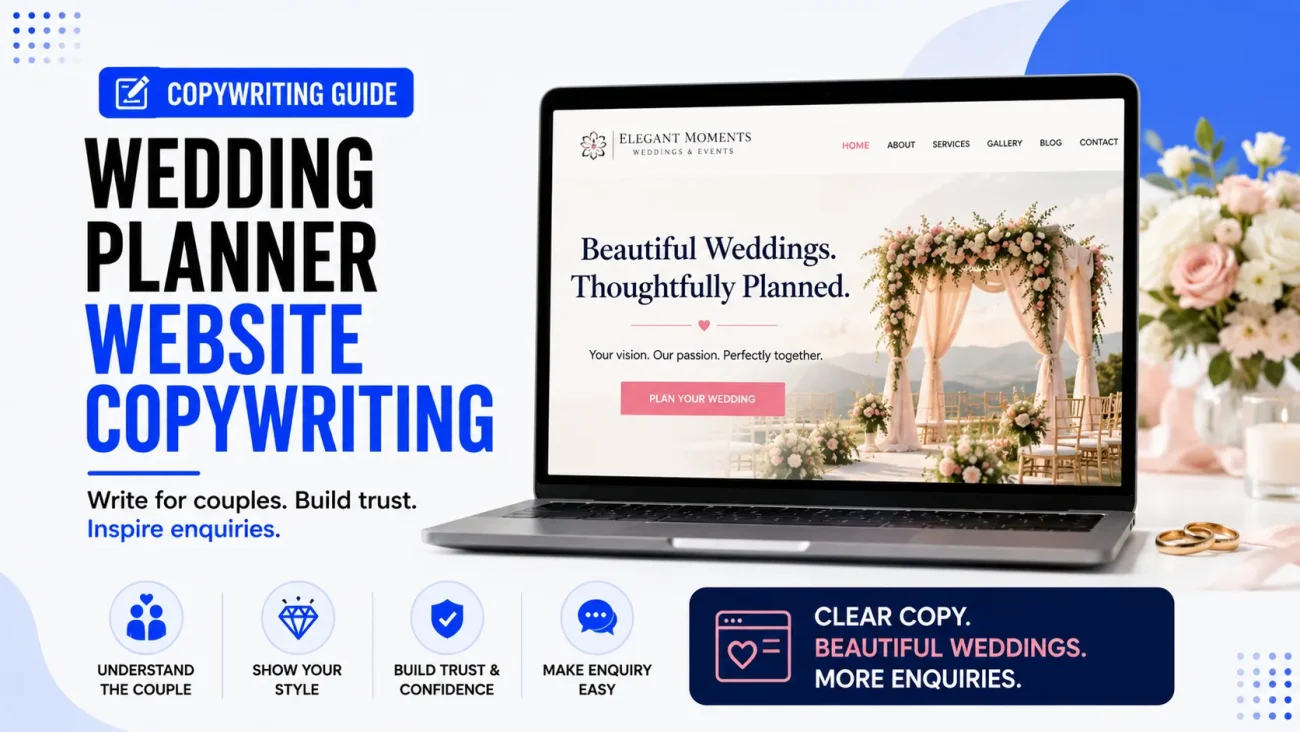
Planning a wedding is very different from buying an ordinary service. A couple is not simply looking for someone who can arrange flowers, book vendors or manage a schedule. They are choosing someone who may become an important part of one of the biggest events in their life, which means the website has to do more than describe services. Good Wedding Planner Website Copywriting should help the couple imagine the kind of wedding they could have while also making them feel that the planning process will be handled properly.
This is why wedding planner websites need a different approach from many other local business websites. A plumber can focus mainly on the problem, service and location, while a wedding planner needs to balance emotion with practical information. Couples want beautiful ideas, but they also want to know whether the planner understands their budget, style, venue, guest list and concerns. Research into wedding-planner hiring decisions has also found that factors such as trust, perception and motivation can influence a person’s intention to hire a wedding planner.
A Wedding Planner Is Selling More Than a Wedding Service
One of the biggest mistakes in Wedding Planner Website Content is describing the business only as a list of things it can do. A planner may offer venue selection, decoration, vendor management, guest management, timeline planning and wedding-day coordination, but couples are not really buying a list of tasks. They are buying help with bringing their plans together and reducing the amount of work they have to carry themselves.
For example, instead of writing:
“We provide complete wedding planning, decoration, vendor management and event coordination.”
a stronger version could be:
“We help you plan the wedding you have imagined while taking care of the details, vendors and timeline behind it.”
The second version still explains the service, but it connects the service with the reason a couple may want to hire a planner in the first place.
Understand the Once-in-a-Lifetime Buyer
A wedding is unusual because the customer usually does not have years of experience buying the service. Most couples are planning a wedding for themselves for the first time, so they may not know what a planner normally handles, what questions they should ask or which planning package would be right for them.
That means Wedding Planner Website Copywriting should not assume that visitors already understand the industry. Instead, the website should explain the process in simple language and answer the questions couples are likely to have before they feel comfortable making an enquiry.
The copy should help answer questions such as:
- What exactly do you help with?
- What type of weddings do you plan?
- What kind of couples do you work with?
- What does your planning process look like?
- What is included in your service?
- What happens after we enquire?
- Can you work with our budget and style?
- Can we see examples of your real work?
These questions are important because couples often compare planners based on their portfolio, planning style, budget fit, reviews, process and availability before deciding whether to make contact.
The Homepage Should Start With Their Wedding
Your Wedding Planner Homepage Content should not begin with a long introduction about when the company was started or how passionate the team is about events. Those details may have a place later on the website, but the opening section should first help the couple understand what kind of wedding you plan and whether your approach feels right for them.
For example, instead of:
“Welcome to ABC Events, a leading wedding planning company with years of experience.”
try:
“Beautiful, well-planned weddings without carrying every detail yourself.”
Then the supporting text can explain:
“From the first planning meeting to the final guest departure, we help couples organise the people, vendors, timeline and details that bring their wedding together.”
The headline creates an emotional connection while the supporting copy explains the practical service, which gives the visitor both sides of the decision.
Our earlier article, How to Write a Headline for a Local Service Website explains how a clear homepage headline can explain the service, customer and location without using unnecessary words.
Write About the Couple, Not Only the Planner
Many planners write their homepage using sentences such as “We create,” “We provide,” “We offer” and “Our team handles.” There is nothing wrong with these phrases, but if almost every sentence starts with “we,” the website can begin to feel like a company brochure rather than a conversation with someone who needs help.
Good Wedding Planner Website Copywriting should regularly bring the focus back to the couple and their experience.
Instead of:
“We coordinate your vendors and manage your wedding timeline.”
try:
“You should be able to enjoy your wedding day without checking whether every vendor has arrived or whether the next event is starting on time.”
The service is still being explained, but now the reader can see why the service matters to them.
This does not mean removing the word “we” from the website. It means balancing statements about the planner with statements about the customer’s needs, worries and goals.
Show the Type of Wedding You Plan
A couple should not have to guess whether a wedding planner is suitable for their event.
If you mainly plan intimate weddings, destination weddings, traditional Indian weddings, luxury celebrations or modern city weddings, your website should make that clear through both the words and images.
For example:
“We plan intimate weddings for couples who want a relaxed celebration with their closest family and friends.”
This gives the visitor more information than:
“We create unforgettable weddings.”
The first statement describes the type of customer and event, while the second could describe almost any wedding planner.
This is also useful for Event Planner Website Copywriting, because different event buyers have different expectations. A corporate client looking for a conference planner may care about timelines, vendors, guest numbers and logistics, while a wedding couple may care more about personal attention, style, communication and how smoothly the day will feel.
Use Your Portfolio as Proof, Not Just Decoration
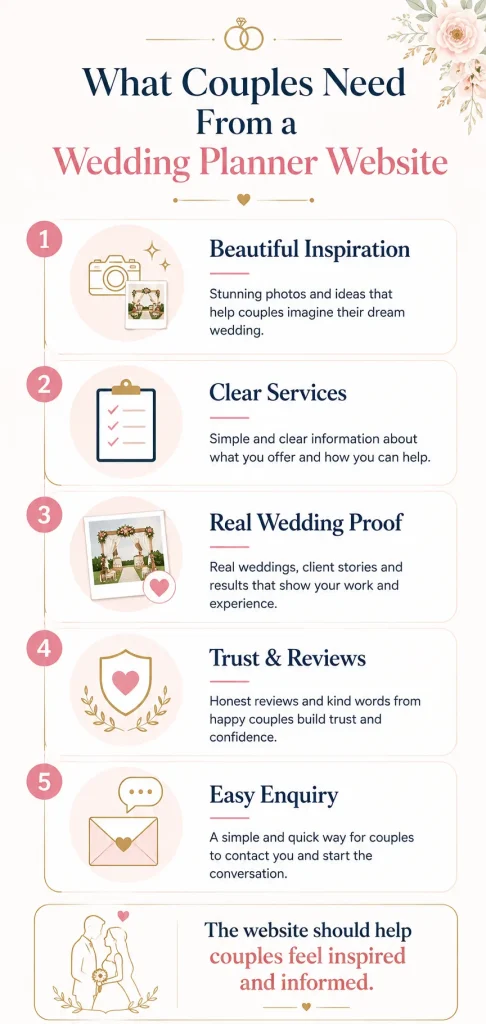
Wedding websites are naturally visual, but beautiful photographs alone do not always explain why a couple should hire the planner.
A portfolio becomes more useful when the copy around it explains what the planner actually did.
Instead of simply showing:
“A Beautiful Wedding in Jaipur”
you could write:
“A 250-guest Jaipur wedding planned around a traditional ceremony, outdoor dinner and late-night celebration, with our team managing the venue, vendors, guest movement and wedding-day timeline.”
Now the visitor can understand the scale and type of work involved.
Current guidance for wedding planner websites also recommends showing full real-wedding galleries rather than relying only on a few scattered photographs, because couples need enough context to imagine what their own event could look and feel like.
Tell the Story Behind Each Wedding
One of the strongest ways to improve Wedding Website Copywriting is to turn portfolio entries into small case studies.
You do not need to write hundreds of words for every wedding. A short story can be enough to explain the couple’s starting point, the planning challenge and the result.
For example:
Before the planning
“The couple wanted a large family wedding but were struggling to bring several vendors and events into one clear plan.”
What we handled
“We coordinated the venue, decorator, catering team, guest schedule and vendor timings while keeping the couple involved in the decisions that mattered most to them.”
The result
“The wedding moved through each ceremony and celebration according to the planned schedule, while the couple and their families could focus on enjoying the day.”
This kind of copy gives the portfolio more meaning because it shows the planner’s role instead of only showing the final decoration.
Make Your Services Easy to Understand
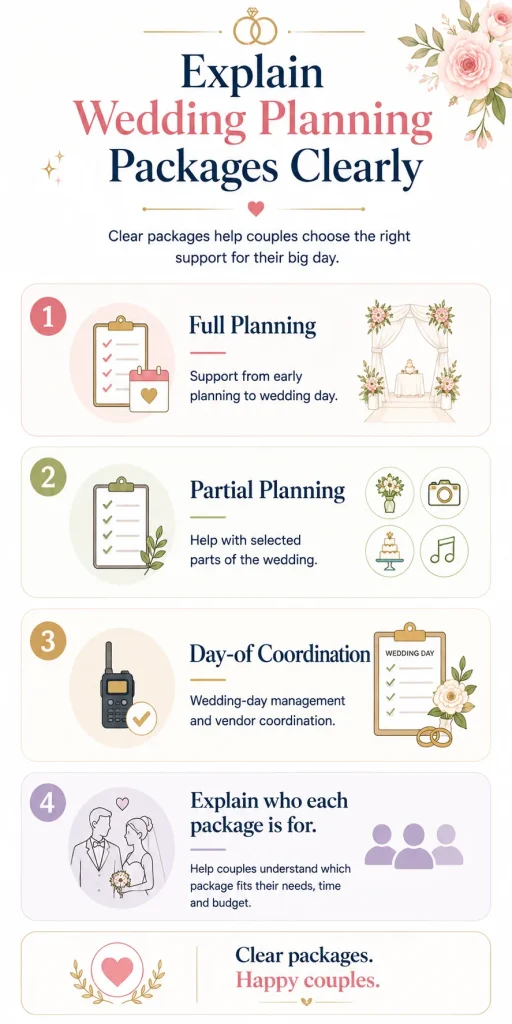
A common problem with Wedding Planner Website Content is that services are described using broad names such as “Full Planning,” “Partial Planning” and “Day-of Coordination” without explaining what those names actually mean.
Someone planning their first wedding may not understand the difference.
Instead of simply writing:
Full Wedding Planning
add a short explanation:
For couples who want support from the early planning stage through the wedding day, including vendor coordination, timeline planning, meetings and event-day management.
Then explain who the service is best for.
For example:
This may suit you if you have the vision for your wedding but do not want to manage every vendor, meeting and deadline yourself.
This is much more helpful than making the visitor open a contact form just to understand what a package includes.
Should Wedding Planners Show Prices?
Price is often an important part of the decision, especially when couples are comparing several planners.
That does not always mean every planner must publish a complete fixed price list, because wedding services can change based on guest count, location, event size, planning scope and other details. However, giving some pricing guidance can help visitors understand whether the service is within their expected range.
For example:
“Wedding planning packages start from ₹X, with final pricing based on event size, location and the level of support required.”
This is more useful than saying:
“Contact us for pricing.”
with no other information.
Clear pricing cues can also reduce enquiries from people who are far outside the business’s normal budget range, while allowing suitable couples to move forward with more confidence. Current wedding website guidance also recommends explaining package scope and, where possible, providing starting prices or ranges.
Our earlier article, Website Pricing Strategy: Should You Put Prices on Your Website? explain a deeper look at when businesses should show prices, starting prices or pricing guidance on their websites.
Build Trust Before Asking for an Enquiry
A couple is not simply asking, “Can you plan a wedding?”
They are also asking themselves, “Can I trust this person with my wedding?”
This is where the About page, testimonials, real wedding examples, experience, planning process and team information become important.
A good Wedding Planner Website Copywriting strategy should therefore introduce trust signals before the final enquiry section rather than putting everything on a separate About page and expecting visitors to find it themselves.
For example, after explaining your services, you could introduce:
“Meet the team who will be beside you throughout the planning process.”
Then show the planner’s photograph, short introduction and approach.
The About page can provide more detail, but the homepage should still give visitors enough information to start building confidence.
Write an About Page That Feels Personal
Couples often want to know who they will actually be working with, especially when the service involves many conversations over several months.
A weak About page might say:
“Our company is a leading wedding planning organisation committed to excellence and customer satisfaction.”
A stronger version could say:
“We started planning weddings because we enjoyed bringing together the many small details that make a celebration feel personal, from the first venue visit to the final guest departure.”
The second version tells a small story and gives the visitor an idea of the person behind the business.
This is especially useful because current wedding planner website guidance places strong value on the About page as a place to build personal trust and explain the planner’s approach.
Use Testimonials That Tell a Story
A testimonial such as:
“Amazing service. Highly recommended!”
is positive, but it does not tell a future client much about what actually happened.
A stronger testimonial explains the situation and the value of the planner.
For example:
“We were struggling to manage our venue, decorator and catering team at the same time, so having one person coordinate everything made the final few weeks much easier. On the wedding day, we did not have to keep checking with vendors because the planning team was already handling the schedule.”
The second review gives future couples something they can relate to.
When collecting testimonials, try to keep specific comments about communication, planning, vendor coordination, problem solving and the wedding-day experience rather than asking only for a general rating.
Explain Your Planning Process
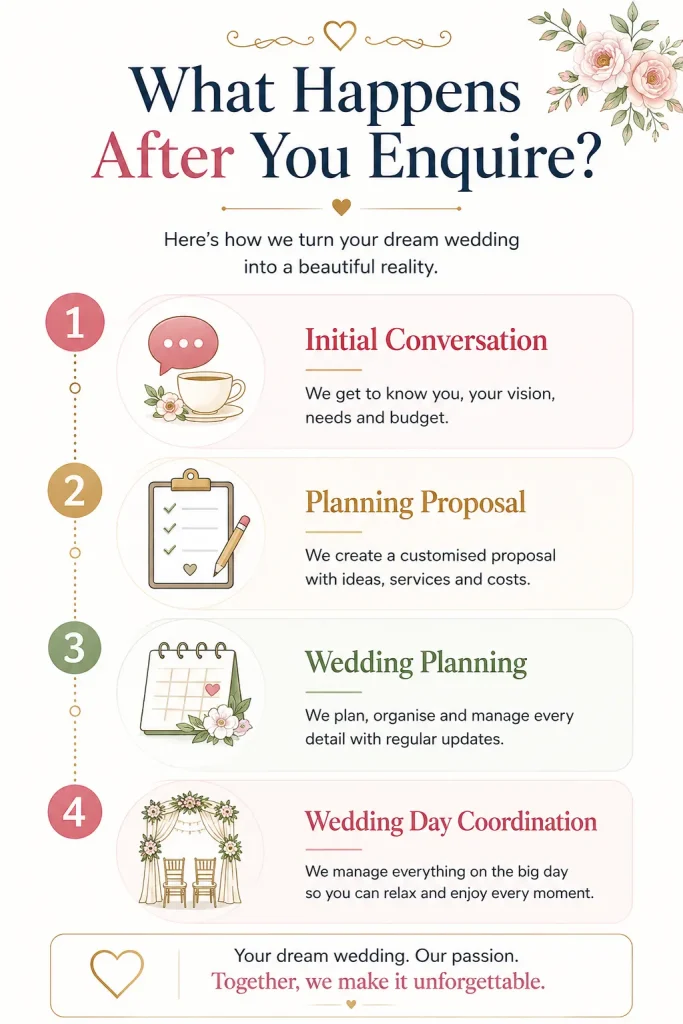
One of the simplest ways to make Wedding Planner Website Content more useful is to explain what happens after someone decides to work with you.
A simple process might look like this:
1. Initial Conversation
“We learn about your wedding, preferred date, venue, guest count, style and the kind of support you need.”
2. Planning Proposal
“We recommend the service and planning support that best matches your requirements.”
3. Planning Begins
“Once everything is confirmed, we work through vendors, schedules, design decisions and the other important details.”
4. Wedding Day
“Our team coordinates the agreed plan so you can focus on your guests and the celebration.”
This gives the visitor a mental picture of what working with the planner will be like, which can make the decision feel less uncertain.
Write for Emotion Without Overdoing It
Wedding copy should have emotion, but it does not need to use dramatic words in every paragraph.
Words such as “magical,” “unforgettable,” “dream,” “perfect” and “once-in-a-lifetime” can be useful when they fit the brand, but repeating them too often makes the copy feel like standard wedding advertising.
Instead, show the emotion through the situation.
For example:
“You should not spend your wedding reception checking whether the photographer has arrived, asking the caterer about dinner timing or looking for a missing vendor.”
This creates a clear picture without saying the wedding will be “absolutely magical.”
Simple writing can actually feel more personal because it sounds closer to the way people speak when discussing a real event.
Talk About Problems Couples Actually Have
Good Wedding Planner Website Copywriting should not only talk about beautiful weddings. It should also acknowledge the problems that make people consider hiring a planner.
A couple may be worried about:
- Managing many vendors at once.
- Keeping track of deadlines and payments.
- Coordinating different ceremonies.
- Handling guest movement and schedules.
- Making sure vendors know where to be and when.
- Dealing with last-minute problems.
Your website can mention these problems without making the planning process sound frightening.
For example:
“There are many small details behind a smooth wedding, and most couples do not want to spend their engagement checking vendor timings and chasing updates. Our planning service takes care of those moving parts so you can stay involved in the decisions that matter to you.”
That is much stronger than simply saying, “We take away your stress.”
Make the Enquiry Form Feel Easy
After reading your website, the couple should know what happens when they contact you.
A long form asking for every possible detail can make the first step feel like work. Current wedding planner website guidance recommends keeping enquiry forms short and human, asking only for information that helps the planner respond properly.
A simple form might ask for:
- Name
- Email or phone number
- Wedding date or expected month
- Location or venue
- Approximate guest count
- Type of planning support needed
- A short message
The message field can even guide the couple:
“Tell us a little about your wedding and what you would like help with.”
That feels much more welcoming than a blank box labelled “Additional Information.”
Your CTA Should Feel Like the Next Step
A wedding planner does not always need a button that says “Buy Now.” The visitor is usually not ready to make the entire decision from one website visit.
The better goal is to make the next step simple.
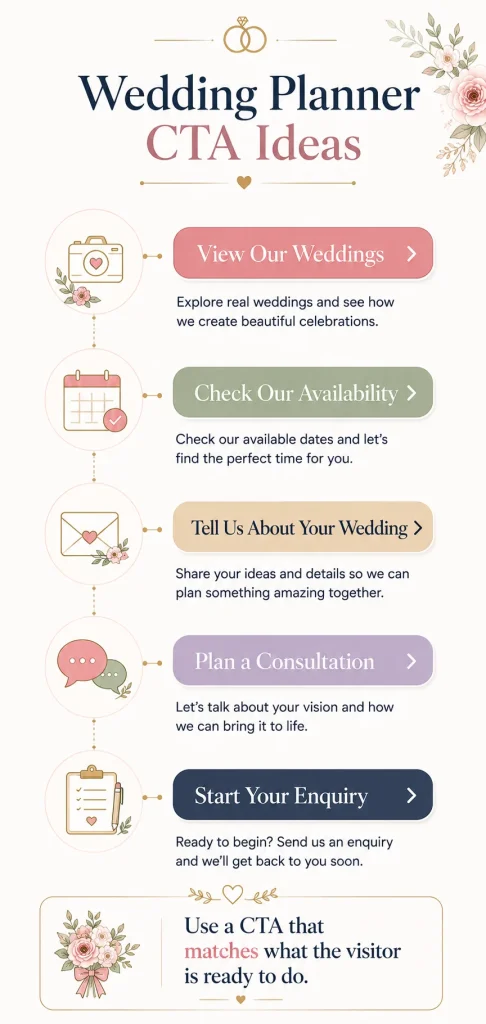
Useful CTA examples include:
Check Our Availability
Plan a Consultation
Tell Us About Your Wedding
Ask About Our Planning Services
Start Your Wedding Enquiry
The button should match the stage of the buyer. Someone who has only just discovered the planner may prefer “View Our Weddings,” while someone who has already read the services and testimonials may be ready for “Check Availability.”
Write for Different Types of Wedding Buyers
Not every couple wants the same thing, so Wedding Planner Website Content should avoid assuming that every visitor has the same wedding in mind.
One couple may want a small intimate ceremony, another may be planning a large family celebration, while another may want a destination wedding with guests travelling from different cities.
If the business handles several types of events, the homepage can introduce the main categories and then guide visitors to more specific pages.
For example:
“Planning an intimate celebration, a large family wedding or a destination event? Explore the planning service that fits your wedding.”
Then link to the relevant service pages.
This keeps the homepage simple while giving different buyers a clear path forward.
Use Real Details Instead of Empty Claims
The easiest way to make Event Planning Website Content stronger is to replace general claims with details that show what the business actually does.
Instead of:
“We provide exceptional service.”
write:
“You will have one planning contact throughout the process, with scheduled meetings to review vendors, timelines and upcoming decisions.”
Instead of:
“We handle everything.”
write:
“We coordinate the agreed vendors, planning timeline and wedding-day schedule so you do not have to manage each team separately.”
Specific information gives the visitor something they can understand and compare.
A Simple Structure for a Wedding Planner Homepage
If you are writing Wedding Planner Website Copywriting for a new website, you do not need to fill every section with long paragraphs. A simple structure can provide enough information while keeping the page easy to move through.
Hero Section
Clear wedding planning headline, short supporting copy and CTA.
Wedding Portfolio
Real weddings with short descriptions explaining the planner’s role.
Services
Clear packages or planning options with simple explanations.
About the Planner
A personal introduction that builds trust.
Process
A simple explanation of what happens after enquiry.
Testimonials
Specific reviews from real couples.
Service Area
Cities, venues or destination regions served.
FAQ
Answers to common questions about planning, packages and enquiries.
Final CTA
A simple invitation to discuss the wedding or check availability.
This structure gives the visitor a logical path from inspiration → information → trust → enquiry, which is also a pattern used in current wedding planner website guidance.
Common Wedding Planner Copywriting Mistakes
The biggest mistake is making the website sound like every other wedding planner website.
If the page repeatedly says “dream wedding,” “magical moments,” “unforgettable memories” and “stress-free planning” without explaining what makes the planner different, the visitor has little information to use when comparing businesses.
Another common problem is showing beautiful photos without explaining the planner’s role. A visitor may like the decoration but still not know whether the business planned the entire wedding, handled coordination only or worked with another event company.
A third problem is hiding important information such as service scope, planning process, starting price guidance or the next step. Couples should not have to send an enquiry simply to understand what the planner actually offers.
The Main Rule for Writing Wedding Planner Copy
The main rule is simple: help the couple feel that the planner understands both the wedding they want and the work required to make it happen.
Beautiful words can create interest, but clear information builds confidence.
Your website should show the kind of weddings you plan, explain how you work, give visitors enough information about your services, show real proof, introduce the people behind the business and make it easy to ask questions.
That balance is what makes Wedding Planner Website Copywriting different from simply writing attractive wedding-themed marketing copy.
Conclusion
A wedding planner website has to speak to a buyer who is making a personal and important decision, and that means the copy should do more than describe how beautiful the business’s previous weddings looked. It should help couples understand what the planner does, what working with the planner feels like and why they can trust the business with the many details that sit behind their wedding day.
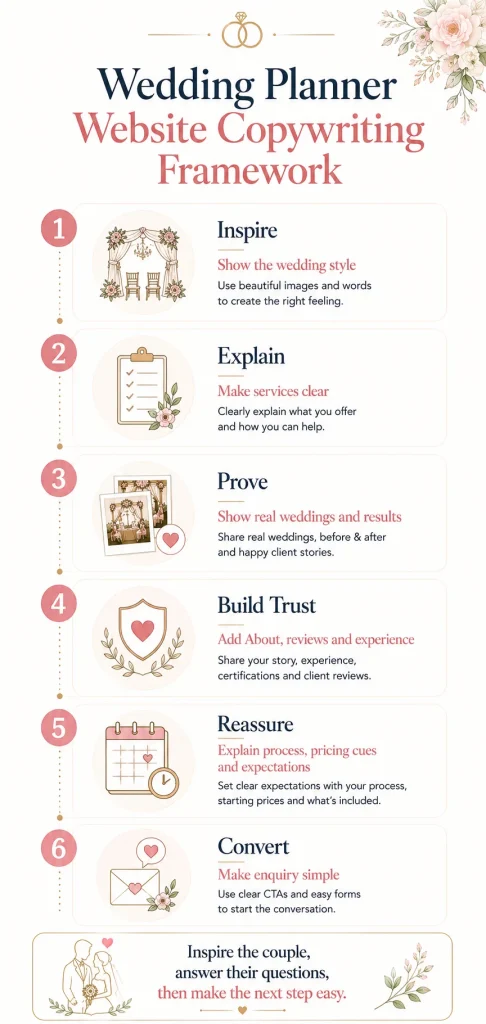
Good Wedding Planner Website Copywriting combines emotion with useful information. The homepage can create excitement, the portfolio can show real proof, the service pages can explain what is included, the About page can introduce the people behind the business, testimonials can show the experience of previous couples and the enquiry process can make the next step feel simple.
Most importantly, the website should speak to the couple rather than constantly speaking about the business. Instead of only saying what the planner offers, explain how those services help the couple plan, decide, organise and enjoy the experience.
A couple visiting a wedding planner website is not simply asking, “Can this business organise an event?” They are also asking, “Can I trust these people with something that matters deeply to me?”
Your copy should help them answer that question with confidence.